Strategy and Adaptive Leadership

Turn plans into decisions, learning into action, leadership into trust.
Start LearningWHAT THIS COURSE OFFERS
-
Seeing Strategy Differently
-
Strategy Beyond the Plan
- What Strategy Looks Like in Real Life
- Strategy as Lived Practice
- Strategy Is Already Happening
- The Difference Between a Wish List and a Strategy
- What Are We Really Prioritising?
- Strategy or Slogan?
- From Document to Direction
-
What Are You Really Trying to Shift?
- Naming the Shift
- From Mission to Strategic Focus
- Meaningful Change, Not Inflated Promise
- What Needs to Move?
- Define the Shift
- Narrow the Field
- Focus Creates Possibility
-
Strategic Choices and Trade-Offs
- The Choices Strategy Requires
- Why Trade-Offs Matter
- The Cost of Unnamed Choices
- Name the Trade-Off
- Pursue, Protect, Pause, Stop
- Who Pays the Cost?
- Strategy Gets Clearer When Choices Do
-
From Vision to Strategic Direction
- Turning Vision into Direction
- When Vision Is Too Broad to Lead
- Outcomes, Boundaries, and Strategic Focus
- From Broad Ambition to Strategic Clarity
- Clarify the Direction
- What Is Out of Scope?
- Direction Makes Vision Usable
-
What Strategy Needs to Hold
- The Shape of a Usable Strategy
- The Core Elements of a Strong Strategy
- When Strategy Starts to Fray
- Does Your Strategy Actually Hold?
- Stress-Test the Strategy
- Find the Gaps
- Strong Strategy Can Carry Weight
-
-
Power and Adaptive Leadership
-
Leading in Complexity
- What Complexity Asks of Leaders
- When the Problem Is Not Fully Knowable
- Beyond Technical Fixes
- Leading When There Is No Clear Answer
- Technical or Adaptive?
- Where Are Familiar Responses Failing?
- Complexity Changes the Leadership Task
-
How Power Shapes Leadership
- Power Is Part of the Leadership Context
- Formal Authority and Informal Power
- Identity, Legitimacy, and Leadership Perception
- Who Gets Read as a Leader?
- Map the Power Around Your Role
- Whose Leadership Gets Recognised?
- Leadership Is Never Power-Neutral
-
Working with Resistance and Tension
- Resistance Is Part of the Work
- What Resistance Can Reveal
- Staying Present in Strategic Tension
- Reading the Signal in Resistance
- What Might This Resistance Be Protecting?
- My Pattern Under Pressure
- Tension Can Be Worked With
-
Holding Authority with Integrity
- What Integrity Looks Like in Leadership
- Using Authority Without Overreach
- Accountability, Trust, and Leadership Practice
- Holding Power Without Tightening Your Grip
- Where Do I Need to Step In or Step Back?
- Integrity Check
- Authority Needs Stewardship
-
Leading Change Across Difference
- Difference Is Part of the Leadership Landscape
- Working Across Perspective and Position
- Power, Trust, and Uneven Risk
- Leading When People Are Not Starting from the Same Place
- Who Is Carrying More Risk?
- Leading Across Difference in My Context
- Difference Requires a Different Kind of Leadership
-
-
Tools for Strategic Thinking
-
Diagnosing the Strategic Environment
- Reading the Landscape Around You
- What the Context Is Asking of Strategy
- Looking Beyond the Immediate Problem
- Start with the Landscape
- Scan the Environment
- What Are We Responding To?
- Better Strategy Starts with Better Diagnosis
-
Mapping Stakeholders, Influence, and Power
- Strategy Is Always Relational
- Who Shapes the Outcome?
- Visible Power, Hidden Influence
- Map the People Around the Strategy
- Stakeholder and Influence Map
- Who Is Missing from the Picture?
- Power Changes the Map
-
Strategic Foresight in Practice
- Looking Ahead Without Trying to Predict
- Signals, Shifts, and Emerging Change
- Why Futures Thinking Matters for Strategy
- Foresight Is Not Prediction
- Spot the Signals
- What Future Might Be Taking Shape?
- Looking Ahead Expands the Present
-
Scenario Thinking and Strategic Options
- Testing Strategy Against Uncertainty
- Building Plausible Futures
- Finding Options That Can Travel
- Try the Strategy in More Than One Future
- Build Two Future Scenarios
- Which Strategic Moves Still Hold?
- Scenarios Make Strategy More Flexible
-
Choosing the Right Strategic Method
- No Single Tool Can Do Everything
- Matching Method to Purpose
- What Different Methods Make Visible
- Choosing the Tool That Fits
- Choose Your Method
- What Does This Tool Miss?
- Methods Are Supports, Not Solutions
-
-
Turning Strategy into Action
-
From Strategic Direction to Action
- Making Strategy Actionable
- What It Takes to Move from Intention to Action
- When Strategy Stalls at the Level of Ideas
- Turning Direction into Movement
- Translate a Priority into Action
- What Is Blocking Movement?
- Action Needs More Than Intention
-
Mobilising Around Strategy
- Strategy Needs Collective Movement
- Communicating Strategy So People Can Use It
- Alignment, Trust, and Shared Direction
- Helping People Find Themselves in the Strategy
- Tell the Strategy Simply
- Where Is Alignment Weak?
- People Move When Strategy Feels Real
-
Adapting Without Losing Direction
- Staying Responsive Without Drifting
- What Adaptation Makes Possible
- The Difference Between Adaptation and Reactivity
- Adjust the Path, Not the Purpose
- What Needs to Flex?
- Drift or Deliberate Change?
- Adaptation Needs an Anchor
-
Recognising When Strategy Needs to Shift
- Knowing When the Strategy No Longer Fits
- The Signs That Strategy Needs Revisiting
- Revisiting Assumptions Before They Harden
- When Staying the Same Stops Making Sense
- What Assumptions Need Rechecking?
- Where Is the Strain Showing Up?
- Strategy Needs Revisiting Before It Breaks
-
Strategy as an Ongoing Leadership Practice
- Strategy Is Not a One-Off Task
- Keeping Strategy Alive Over Time
- Renewal, Attention, and Strategic Discipline
- Returning to the Strategy Again and Again
- What Needs Renewed Attention?
- My Strategic Practice
- Strategy Lives in Practice
-
WHO THIS COURSE IS FOR
MODULE OVERVIEW
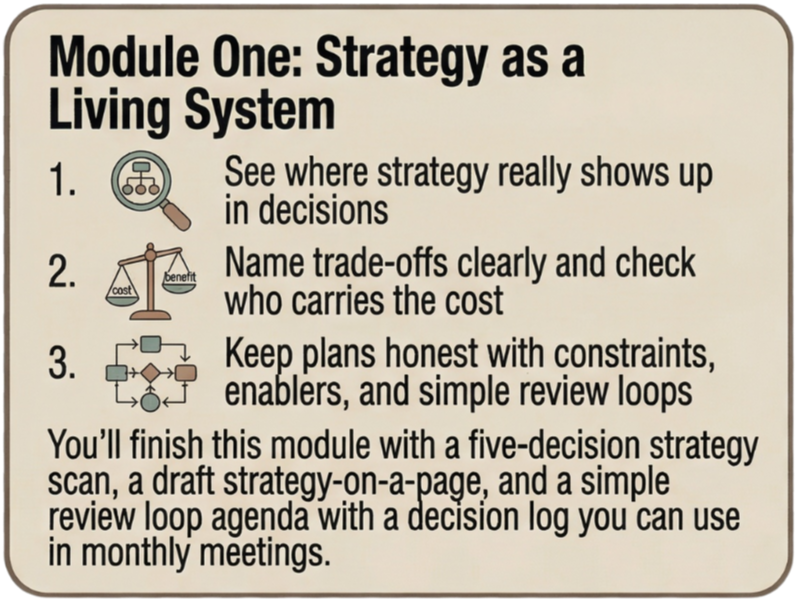
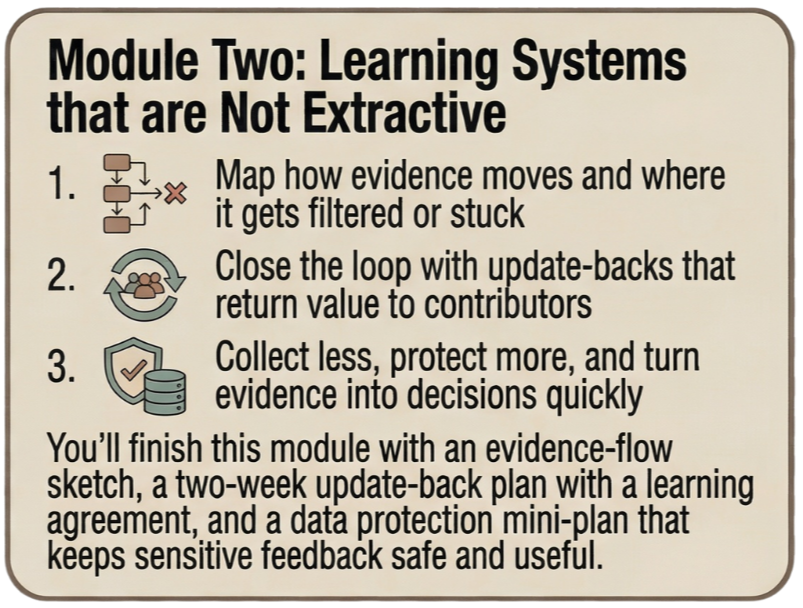
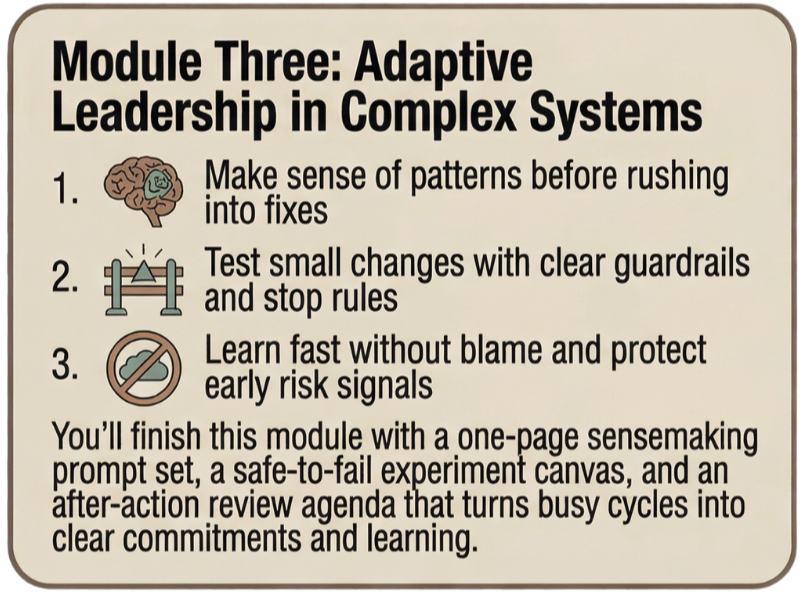
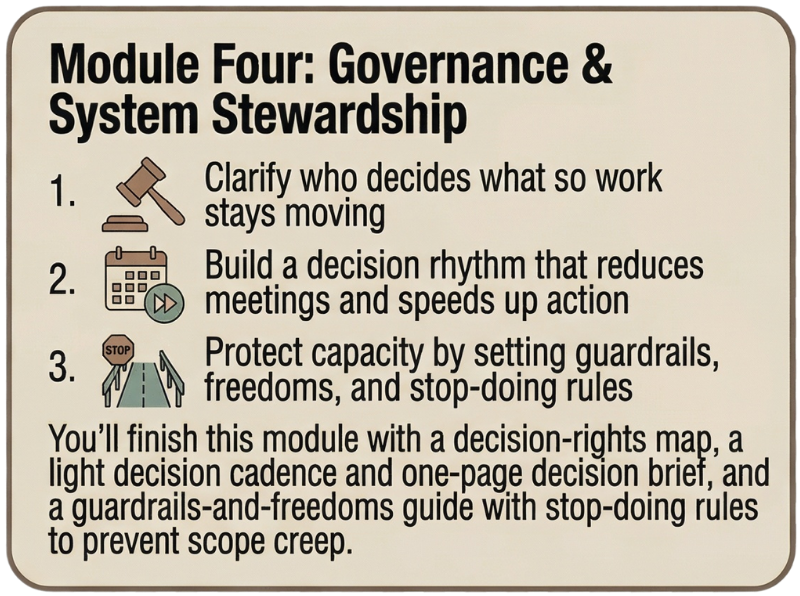
WHAT YOU WILL GAIN