You believe participation should matter.
You want people’s contributions to shape what happens next. You care about creating space for different perspectives, making it easier to speak honestly and helping a group think beyond its familiar answers.

Safer spaces. Fairer participation. Shared direction.
Create the conditions for people to contribute, learn and act together.
Design inclusive sessions, work with tension and guide groups towards decisions they understand and can act on.
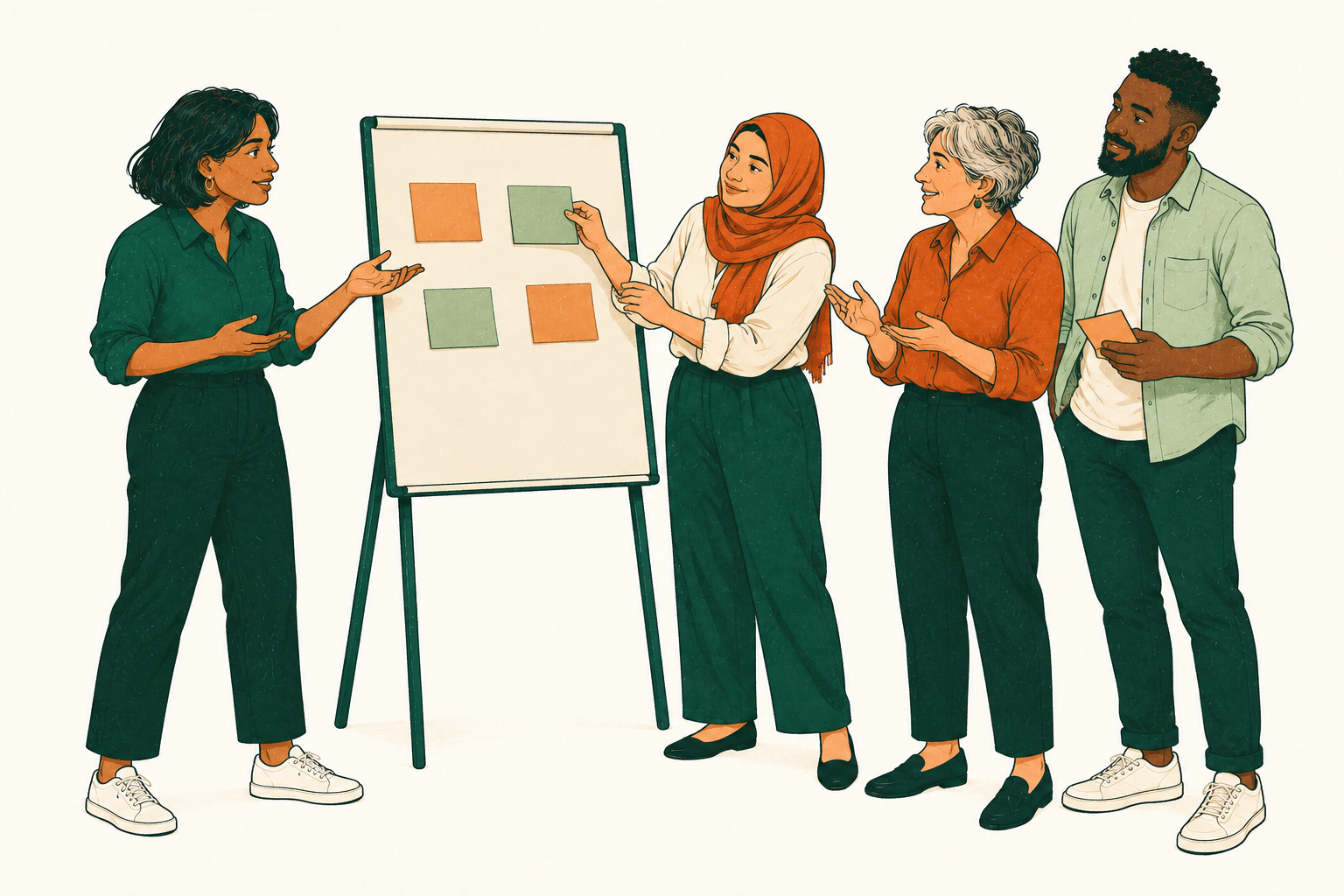
Build sessions with a clear purpose, accessible ways to contribute and safeguards that help people participate with confidence.
Notice when tension, distress or harm needs a response. Choose how to pause, adjust or support the group while protecting people’s dignity.
Help groups make choices without forcing agreement. Capture different perspectives fairly, clarify responsibilities and follow through on what people have contributed.
You care about what becomes possible when people feel able to contribute, challenge one another and learn together.
You want people’s contributions to shape what happens next. You care about creating space for different perspectives, making it easier to speak honestly and helping a group think beyond its familiar answers.
You know that disagreement can reveal something important. You want to meet tension with curiosity, protect people’s dignity and find a way through without rushing everyone towards agreement.
You love the moment when a group sees new possibilities together. You want that energy to lead somewhere, with clear commitments, shared responsibility and follow-through people can trust.
Bring your curiosity. Build the judgement to guide conversations with confidence and care.
Four connected themes, with 16 modules and three introductory lessons.
Opening lesson Building the Foundations
Opening lesson Opening Moves for Safer Participation
Opening lesson Facilitating Through Harm and Distress
Bring a session you need to lead. Use the course to plan how you’ll open it, make space for different perspectives and decide what happens afterwards.
Think about who may find it hard to speak openly. What other ways could you offer for people to contribute?
Susanna Davies
Head, Strategic Partnerships and Initiatives
JRNY Consulting
Susanna developed this course, drawing on 17 years of experience in humanitarian response, evaluation and learning. Her work focuses on locally led change, protection and inclusive partnerships. She holds a master’s degree in International Social Work and Administration.
She has developed and delivered a learning programme for practitioners from 22 countries, facilitated international sessions and created tools for local leadership and collaboration. At JRNY, she leads partnerships that bring people together to shape research and learning.
For you, this brings together:
Focus on facilitation, explore the course library or learn with a facilitated group.
Self-paced access to Facilitation for Learning and Change.
Access the JRNY 360 course library.
£174 with annual access
Confirm your payment option at checkout.
Explore membershipExplore learning with a facilitated group.
Learning with a team? Talk to us about tailored access
Yes. The single-course option is self-paced and includes lifetime access to the course, so you can revisit the material as you put it into practice.
A single-course purchase gives you access to this course. Membership offers access across the JRNY 360 library alongside coaching, live events and the practitioner community.
Yes. Inside the Shift is a free mini course featuring selected lessons from across the library. Explore the free course.
JRNY offers tailored access and curated pathways for organisations. Tell us about your context and what you want the learning to support.
Start with the challenges you recognise in your work and explore a different way forward.